Shop notes · Forming · 5 min
Springback is not a material property
Why the first part off the press brake gets measured, even when the certificate says it should not need to be.
Every so often a drawing arrives with a bend angle called to a quarter of a degree and a note underneath saying the material is S275, as if that settled it. It does not. Two plates from two casts, both certified S275, both inside specification, will come off the same die at angles that differ by more than the quarter degree the drawing is asking for.
What actually varies
S275 is a minimum-yield specification, not a target. The mill has to clear 275 N/mm², and nothing stops it clearing that by a wide margin. Higher actual yield means more elastic strain stored in the bend, and more of the bend comes back when the ram lifts.
Thickness moves too. A plate ordered at 6 mm and delivered at 5.85 mm is inside mill tolerance and will not form the same way as the last one.
What the machine can and cannot know
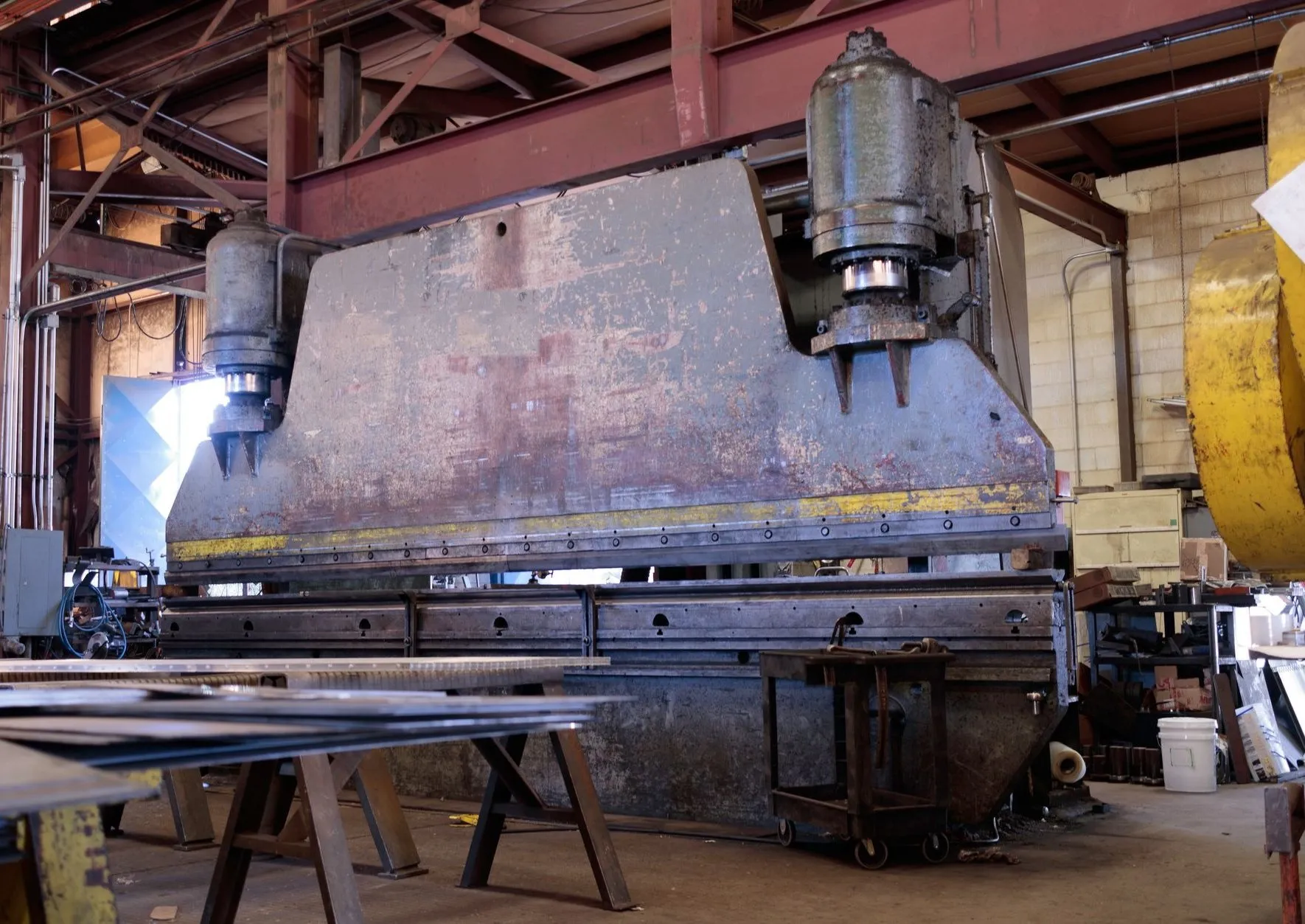
The brake knows exactly where the ram is. It does not know what is under it. So the ram is taken past the finished angle by the amount the steel will spring back, and that amount is found by bending a part and measuring it.
What we do about it
The first part of every batch is bent, measured with a digital protractor and corrected at the control before the rest run. If a batch spans two casts, we measure again when the cast changes. It costs a few minutes, and it is why we can promise ±0.5° without hedging.
What you can do
Call the angle that matters and tolerance the rest generously. If a bend closes onto another part, tell us which face is the datum. And if you need the same angle across a year of repeat orders, ask us to hold material from one cast.